
Rising: War for Dominion
NEWHOPE TECH PTE.LTD.Strategy
4.27.01K Reviews
- Version
- 2.20.4
- Installs
- 5.00M
- Age Rating
- Teen
Screenshots


Our Review of Rising: War for Dominion
 Analysis by Appyee
Rising: War for Dominion is a free medieval strategy game from NETHOOK? TECH PTE.LTD. that puts the focus on building an empire and making decisions that gradually shape your position in a competitive world. I spent time with it as the kind of player who enjoys planning several moves ahead rather than tapping through battles without thinking, and I found its strongest quality in the way it turns progress into a chain of priorities. You are not simply asking whether you can win one fight; you are deciding what deserves attention now and what can safely wait.
That distinction matters because the game can look familiar at first glance. Its store summary talks about forging empires in a medieval age of war, but the more useful question is whether the strategy remains interesting after the initial excitement. In my experience, Rising: War for Dominion works best when I treat every upgrade, march, and resource decision as part of a longer plan. It is less satisfying if I expect a quick match with a clean ending.
Why the empire-building loop is the real attraction
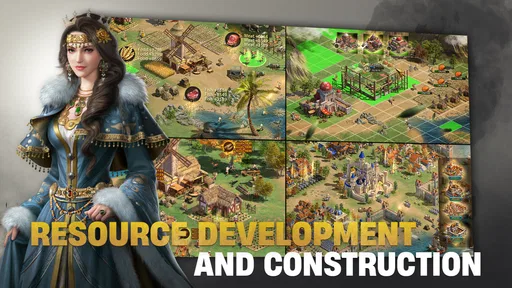
The capability I kept returning to was the game’s long-term empire management. Rather than making combat the entire experience, it encourages me to think about how a stronger position is created over time. A battle is important, but it is only one visible result of earlier choices. The practical challenge is arranging development so that my next opportunity is better than the last one.
This gives the medieval setting a useful purpose instead of leaving it as decoration. Expanding a dominion feels like a sequence of connected decisions: improve what supports the current plan, avoid wasting attention on attractive but poorly timed goals, and recognize when a defensive choice is more valuable than an aggressive one. I like that rhythm because it rewards patience without making every session feel passive.
The game is categorized as a strategy title, and that label fits more closely than a simple war-game description would suggest. I would not recommend approaching it as an action game where quick reactions carry the whole experience. The satisfaction comes from reading the situation, preparing an advantage, and accepting that not every possible improvement can happen at once.
That is also why I found the central capability more meaningful than the medieval theme alone. A castle, army, or territory only matters when it changes the decisions available to me. The best moments came when I had to choose between strengthening my existing position and spending effort on a more ambitious objective. Those choices made the progress feel earned rather than automatic.
How the strategic loop feels during ordinary play
In practice, I usually begin a session by checking what has changed since I last played. I look at the immediate tasks, consider whether my current resources support them, and then decide which action will reduce the most pressure. That simple habit prevents me from spending everything on the first available improvement. It also makes short visits useful, because I can make one sensible decision without needing to complete a long campaign in one sitting.
My preferred workflow is to set a near-term objective before touching optional activities. If I am trying to make my position safer, I focus on the steps that contribute to that goal instead of scattering effort across unrelated upgrades. If I am preparing to expand, I first make sure the supporting parts of my empire are not neglected. This is not a flashy trick, but it is one of the clearest ways to avoid feeling permanently behind.
A second useful habit is to treat every successful action as information. When a plan works, I ask which part of it created the advantage. When it fails, I avoid immediately repeating the same approach with more spending. I found that this mindset makes the game less frustrating, especially when progress slows. The right response is often better sequencing, not simply trying to accelerate everything.
The interface and progression are easier to appreciate when I play with that structure. Without it, the number of available goals can make the experience feel like a checklist. With it, the same range of choices becomes a planning tool. I can decide whether today’s session is about consolidating, preparing, or taking a calculated risk.
One trade-off is that this style of play asks for attention even when the individual actions seem simple. A player who taps through every prompt may still advance, but the deeper value is lost. The game is most rewarding when I pause long enough to connect an upgrade with a future decision. That makes it a poor match for anyone looking for a completely hands-off idle experience.
A realistic evening session
Imagine that I have only a few minutes after work. I open the game expecting to make one quick improvement, but I notice that my immediate resources could be spent in several directions. Instead of choosing the most visible option, I identify the next goal I actually care about: keeping my position stable while preparing for expansion. I make the supporting improvement first, leave the tempting side objective alone, and close the game once the plan is in motion.
That session may not produce a dramatic victory screen, yet it still feels productive because the decision has a purpose. Later, when I return, I am not starting from a random collection of upgrades. I have created a clearer foundation for the next move. This is where Rising: War for Dominion fits well into a routine of short, repeated sessions, provided I enjoy checking progress and making deliberate choices.
For a longer weekend session, I use the same principle at a larger scale. I compare several possible goals, decide which one supports the others, and avoid treating every opportunity as equally urgent. The game becomes more engaging when I let some possibilities wait. In a strategy title, restraint is often more valuable than constant expansion, and this is one of the lessons the experience communicates naturally.
Where the capability is most useful
The empire-management focus is especially effective for players who enjoy gradual improvement. If you like seeing a weak position become more organized, or if you prefer preparing an advantage before committing to a conflict, the game gives you room to play that way. I also think it suits people who like returning to the same world repeatedly, because the pleasure comes from the accumulation of informed decisions rather than a single isolated match.
It can also work for players who want a strategy game that does not demand constant high-speed input. The important decisions are more about timing and priorities than reflexes. I can play cautiously, review my situation, and make progress through a plan that fits my available time. That makes it more approachable than strategy games built around rapid commands or dense competitive control.
However, I would not choose it for a friend who wants a self-contained campaign with a clear conclusion after each session. The ongoing nature of empire development means that the game’s rewards are spread across repeated visits. If you need immediate closure, the gradual loop may feel slow. A traditional turn-based game with defined scenarios would probably be a better fit for that preference.
I would also hesitate to recommend it to someone who dislikes free-to-play progression. The game itself is free, but optional in-app purchases range from $0.49 to $99.99 per item. That does not automatically make the experience unsuitable, but it does mean I would approach spending carefully. I prefer to understand whether a purchase solves a genuine problem in my play style or merely encourages me to skip a period of waiting or planning.
The trade-offs behind steady progress
The biggest strength of the central loop is also its main limitation: progress feels meaningful because it takes time, but that same pace can test my patience. When I have a clear plan, slower development gives each choice weight. When I am unsure what to prioritize, the delay feels more noticeable. The game rewards players who can tolerate gradual results and penalizes impulsive decision-making more through frustration than through any single dramatic failure.
Another trade-off is the temptation to pursue too many goals. Medieval strategy games naturally encourage ambition, and Rising: War for Dominion makes it easy to imagine several possible paths at once. I found that choosing one main direction and one supporting objective worked better than trying to improve everything together. This is a concrete way to make the experience less overwhelming, especially early on.
I also recommend keeping a personal spending boundary before making purchases. Because individual items can reach a high price, a player who buys reactively may lose sight of whether the purchase improves the actual decision-making experience. My approach is to ask whether I am buying convenience that I will value repeatedly or simply reacting to a temporary bottleneck. If the answer is the latter, I usually return to planning instead.
The Teen content rating is worth considering for families as well. I would not present this as a child-focused game, even though its medieval setting may attract younger players. Parents should look at the strategic war theme and the presence of in-app purchases before deciding whether it suits a particular player. The rating is not a minor detail here because the game’s subject matter and spending options both affect the overall fit.
Performance expectations should be sensible too. The current version is 2.20.4 and it supports Android 7.0 or later, so the compatibility range is broad enough for many older devices. Still, compatibility does not guarantee that every phone will feel equally comfortable during extended sessions. I would keep the game updated and pay attention to how smoothly my own device handles it rather than assuming that an older handset will deliver the same experience as a newer one.
How it compares with familiar strategy alternatives
Compared with a traditional board-style strategy game, Rising: War for Dominion offers a more persistent sense of place. I am not resetting the board after every short contest; I am returning to an evolving dominion and continuing a broader plan. That is appealing when I want continuity, but less appealing when I want a perfectly balanced match where everyone begins from the same position.
Compared with a fast real-time war game, it feels more deliberate. I can focus on preparation and priorities instead of relying mainly on quick execution. The cost is that the game may not provide the same immediate intensity as a title built around rapid battles. Players who want constant action should look elsewhere, while players who enjoy watching a plan mature may prefer this slower structure.
It also differs from a purely idle empire game because I found that my choices matter more when I actively organize them. Leaving the game alone may support progress, but the interesting part is deciding what that progress should serve. That distinction is important: I would describe the experience as a strategy game with a persistent progression loop, not as something I can ignore completely and still enjoy to the same degree.
The rating and audience size suggest that the game has established a substantial player base: it holds a 4.2 average from around 95 thousand ratings, with over 5 million installs. I mention that context because it helps explain why the game feels designed for ongoing engagement rather than a small experimental audience. It does not guarantee that every player will enjoy the pacing, but it indicates that the basic format has broad appeal.
Who gets the most from Rising: War for Dominion
I think the best audience is someone who enjoys planning under limits. You will get more from the game if you like asking what should happen next, what can wait, and how one improvement supports another. The medieval setting is a pleasant frame, but the real appeal is the gradual construction of a stronger position through repeated decisions.
It is also a good choice for players who want flexible session length. A short visit can involve reviewing priorities and making one useful move, while a longer session can support deeper planning. I would not call it effortless, though. The game gives you flexibility, but it still expects you to care about the order of your actions.
Players who should skip it are those who dislike persistent progression, optional purchases, or delayed rewards. If you want a strategy game that ends cleanly, avoids recurring development, and puts every player on an equal starting line, another format will probably serve you better. Likewise, if the main reason you play medieval games is for direct combat excitement, this may feel too focused on preparation and management.
For everyone else, my advice is to begin slowly. Do not measure the game only by how much you can unlock in one sitting. Choose a clear objective, make supporting decisions, and resist spending simply because an obstacle appears. That approach reveals the game’s strongest idea: your progress becomes more satisfying when it reflects a plan rather than a collection of rushed upgrades.
Rising: War for Dominion is free to try, and I can see why it has attracted a broad audience since its release on August 10, 2020. Developed by NEWHOPE TECH PTE.LTD., it offers a persistent medieval strategy experience built around shaping an empire over time. I would recommend it to patient planners who enjoy returning to a developing world and making careful choices. I would skip it if I wanted instant battles, a finished campaign, or a progression system I never needed to monitor.
My final view is positive but measured. The game’s most valuable feature is not simply the promise of war; it is the way long-term empire management turns small decisions into a larger direction. When I play with a clear priority, the pacing feels purposeful. When I chase every opportunity or spend reactively, the same system becomes tiring. That makes the recommendation straightforward: if you enjoy strategy as the art of choosing what not to do yet, Rising: War for Dominion is worth trying.
Verdict
Strengths of Rising: War for Dominion
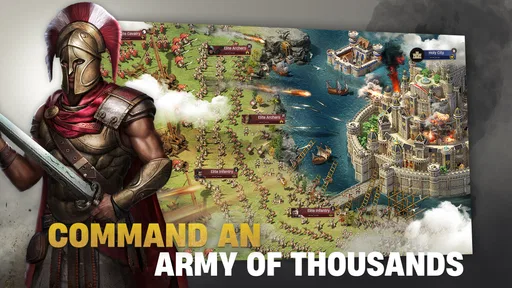
- Strategic battles reward careful planning and smart troop positioning.
- Multiple progression systems provide long-term goals for dedicated players.
- Guild features encourage cooperation, shared objectives, and social interaction.
- Regular events can add variety beyond the standard campaign experience.
- The fantasy setting gives the game a distinctive atmosphere and visual identity.
Limitations of Rising: War for Dominion
- Progress may feel slow without frequent play or resource management.
- Competitive modes can favor players who spend money on upgrades.
- Large battles may become difficult to follow on smaller phone screens.
- The number of menus and systems can feel overwhelming for new players.
- A stable internet connection is required for most gameplay features.
Similar Picks in This Category
View All
Clash of Clans
Supercell4.5

Plants vs. Zombies™
ELECTRONIC ARTS3.7

Lords Mobile: Kingdom Wars
IGG.COM4.5

Clash Royale
Supercell4.4

State.io — Conquer the World
CASUAL AZUR GAMES4.1

Car Driving School : Car Games
Spark Game Studios3.9
Frequently Asked Questions
What is Rising: War for Dominion, and what kind of game is it?
Rising: War for Dominion is a strategy-focused mobile game built around territory control, resource management, military expansion, and competition with other players. You typically develop a base or faction, research upgrades, recruit and improve units, and make decisions about when to attack, defend, or cooperate. Its appeal comes from combining long-term planning with real-time or timed progression systems.
Can I play Rising: War for Dominion without spending money?
You can generally begin playing Rising: War for Dominion without making an immediate purchase, and free players can usually complete early objectives, develop their territory, and participate in many standard activities. However, optional in-app purchases may accelerate construction, research, recruitment, or resource collection. Progress can therefore feel slower for players who choose not to spend, especially when competing against highly active or paying users.
Does Rising: War for Dominion require an internet connection?
Because Rising: War for Dominion is designed around online progression, competitive events, shared worlds, and interactions with other players, a stable internet connection is normally required for the main game experience. Offline access may be limited or unavailable, and interrupted connections can affect battles, timed actions, or synchronization. Players should also expect the game to download updates and additional data after installation.
Is Rising: War for Dominion suitable for beginners?
Rising: War for Dominion can be suitable for beginners, particularly if they enjoy strategy games and are willing to learn through tutorials, missions, and gradual experimentation. New players may initially find the number of buildings, resources, timers, units, and menus overwhelming. Joining an active alliance or community can make the learning process easier, since experienced players often provide advice, protection, and help with development.
What should I know about privacy, permissions, and in-app purchases before downloading?
Before downloading Rising: War for Dominion, review its store listing and privacy information to understand which permissions, account details, and device data may be requested. The game may also include advertisements, optional purchases, subscription-style offers, or randomized rewards, depending on the version and region. To avoid unexpected charges, use device purchase controls and confirm whether parental restrictions are enabled.
Play our best games!


